You’re in a virtual meeting, checking emails, replying to Slack, and planning your next call. It feels productive—even essential—to handle several things at once. But here’s the surprising truth: multitasking isn’t boosting your efficiency. Actually, it’s quietly hurting your productivity, decision-making, and leadership skills.
As a busy executive, your time is incredibly valuable. Yet, constantly switching between tasks doesn’t just take time—it depletes mental energy, increases mistakes, and lowers your work quality. Research shows that frequent task-switching can cut productivity by up to 40%, causing decision fatigue, poor focus, and a reactive, not strategic, leadership approach. Despite its allure, multitasking is a major threat to effective leadership.
So, if multitasking isn’t the answer to a demanding workload, what is? In this article, we’ll explain the science behind multitasking and productivity, explore why it’s especially harmful to executives, and share proven methods to regain focus, improve efficiency, and lead effectively.
Why can’t our brains multitask?

For a long time, people in the business world have thought multitasking was a good thing. Leaders often brag about how they can handle meetings, emails, and big decisions all at once. It seems like they’re getting a lot done in a short amount of time. But actually, multitasking can trick us. The more we switch between tasks, the harder our brains have to work, and this can make us less productive, tired, and more likely to make mistakes.

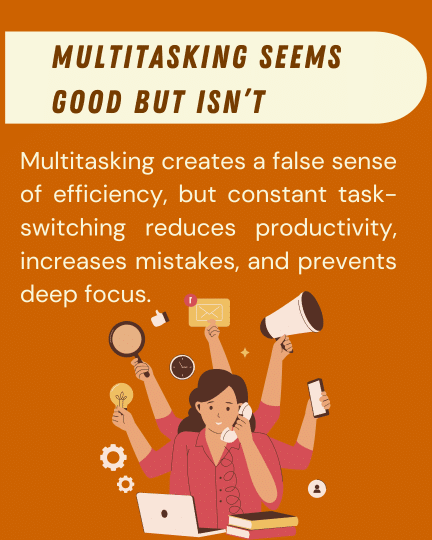
Multitasking Seems Good But Isn’t
Imagine this: You’re in a video call while also checking your inbox, answering a message, and planning your next project steps. You feel super-efficient, like you’re using every second of your day to the fullest. But here’s the problem: our brains aren’t designed to focus on many big tasks at the same time.
Instead of truly multitasking, you’re actually just switching between tasks very quickly. This makes it seem like you’re doing everything at once, but you’re not. Every time you switch, your brain has to “reload” information, which takes time and energy.
- The Price of Switching: Studies show that switching between tasks often can make you 40% less productive. So, what you think is saving time is actually wasting it.
- Dopamine and the “Busy” Feeling: When you multitask, your brain releases dopamine, which makes you feel good. This can trick you into thinking you’re getting more done even when you’re slowing yourself down.
- Superhuman or Scatterbrained? Instead of working efficiently, you’re constantly distracted, which makes it hard to think deeply and strategically.
Feeling busy isn’t the same as being productive. Truly productive people know that it’s better to focus deeply on one thing at a time.
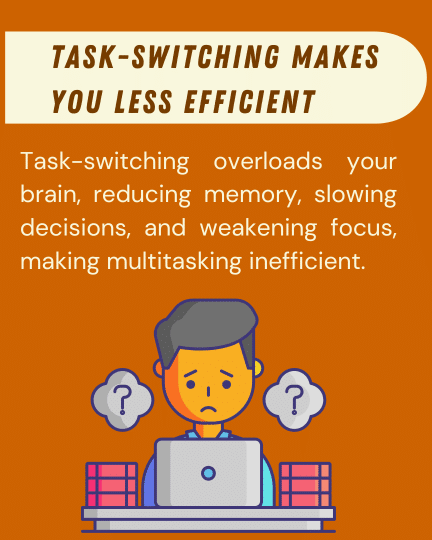
Task-Switching Makes You Less Efficient
Think of your brain like a computer. If you run too many programs at once, it slows down, starts to lag, and might even crash. The same thing happens to your brain when you give it too many tasks.
Here’s why:
- Limited Working Memory: Your brain can only hold a small amount of information at once. When you try to do too many things, important details get lost.
- Decision Fatigue: The more your brain has to switch between tasks, the more tired it gets. This can lead to bad decisions, slower reactions, and not-so-great choices.
- Slower Processing Speed: A study found that it takes about 23 minutes to get your focus back after being interrupted. Even a quick look at your email during a meeting can mess up your ability to understand and remember information.
Multitasking isn’t just inefficient, it actually weakens your ability to focus, process information, and make good decisions.
Even Short Task Switches Waste Time
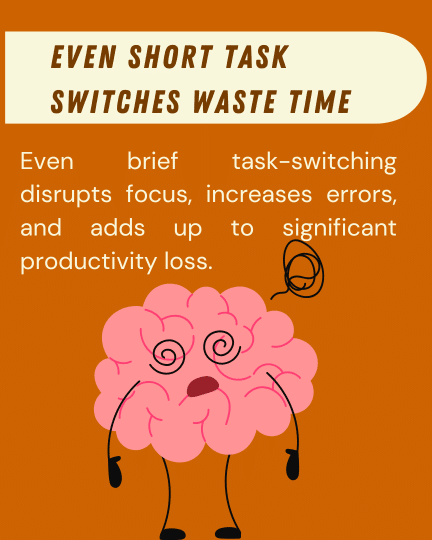
You might think that switching between tasks for a few seconds doesn’t matter much. However research shows that even short interruptions can slow down your thinking, forcing your brain to readjust before going back to the original task.
- The 5-Second Rule (But Not the Good Kind): Every time you switch tasks, your brain takes a moment to catch up. These small delays add up to hours of lost productivity over a day.
- More Mistakes: The more you jump between tasks, the more mistakes you’re likely to make. One study found that multitasking can increase errors by up to 50%.
- The Illusion of Speed: You might feel like you’re working faster, but you’re actually not fully engaged. This can lead to poor memory, careless mistakes, and missed details.
Small distractions can cause big productivity losses. The less you switch tasks, the more efficient and accurate you’ll be.
Multitasking Burns You Out Faster
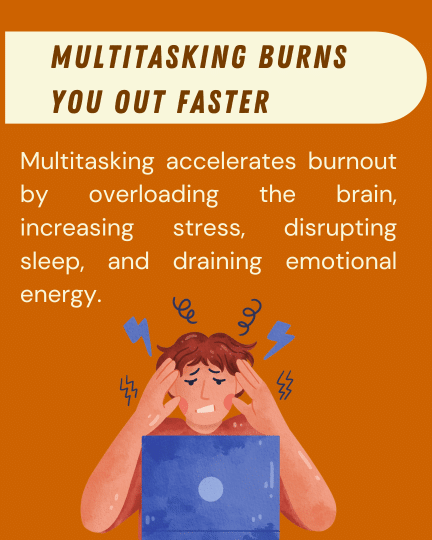
Leaders already have stressful jobs, and multitasking makes it even worse. Here’s why:
- Constant Cognitive Load: Your brain works harder when it has to juggle multiple tasks, leading to fatigue much faster than if you focused on one thing.
- Increased Stress Hormones: Multitasking makes your body release stress hormones, which can make you feel overwhelmed and less able to think clearly.
- Sleep Problems: Constant multitasking can affect your sleep because your brain has trouble “shutting down” after switching between tasks all day.
- Emotional Drain: The more mentally tired you are, the less patience you have, and this can affect your leadership, decision-making, and relationships at work.
Multitasking isn’t just hurting your productivity, it’s also draining your energy, making it harder to think clearly, and increasing your stress levels.
Why Multitasking Makes You a Weaker Leader?
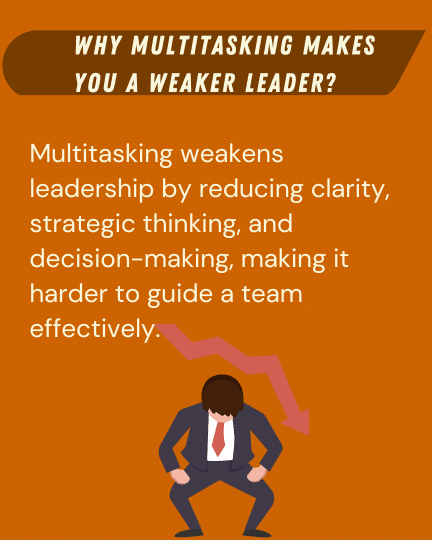
Multitasking doesn’t just slow you down – it actually hurts your ability to be a good leader. As a leader, you need to be clear, think strategically, and make strong decisions. When you try to do too many things at once, you weaken these important leadership skills without even realizing it.
Let’s look at how multitasking makes you less effective as a leader and what that means for your ability to guide a team, make important decisions, and be a strong leader.
Multitasking Keeps You in Crisis Mode
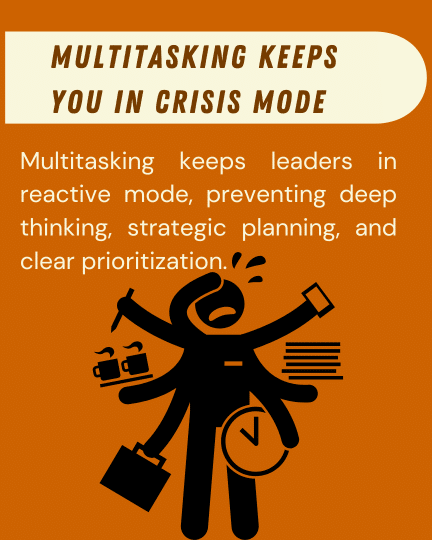
Imagine you’re reviewing financial reports, answering an urgent email, and responding to a team member’s question – all at the same time. You’re technically handling everything, but are you really making the best choices?
- From Strategy to Survival: Multitasking forces you to just react to problems instead of thinking ahead and planning for the future.
- Surface-Level Thinking: The more you split your attention, the less you can really understand complex information. This makes it harder to think critically and plan for the long term.
- Losing Sight of Priorities: Good leaders know how to decide what’s truly important. When you multitask, everything seems urgent, and it’s hard to tell the difference between important tasks and distractions.
Great leaders don’t just keep up – they stay ahead. If you’re always reacting to problems, you’re not really leading.
Multitasking Hurts Your Team
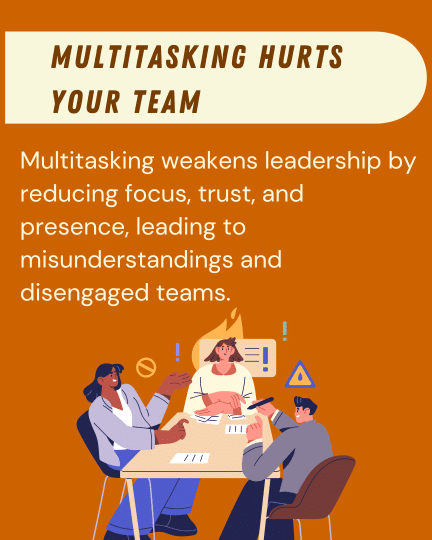
Leaders are expected to be clear, attentive, and present, but multitasking takes these qualities away. If you’ve ever typed an email while someone was talking to you, you know that multitasking makes it hard to really listen.
- Employees Can Tell When You’re Not Focused: If you’re checking your phone in a meeting or answering emails while someone is talking, it makes them feel unimportant. This weakens trust and makes people less engaged.
- More Misunderstandings: Multitasking makes it easier to misread emails, forget important details, or respond without understanding the whole situation. This leads to a lot of unnecessary corrections and wasted time.
- Losing Your Presence: Strong leaders earn respect by focusing on people and actively listening to them. If your attention is always divided, you lose that strong presence.
When you multitask, you’re there in person but not really mentally present. True leadership happens when you give people your full attention.
Half-Paying Attention to Big Decisions
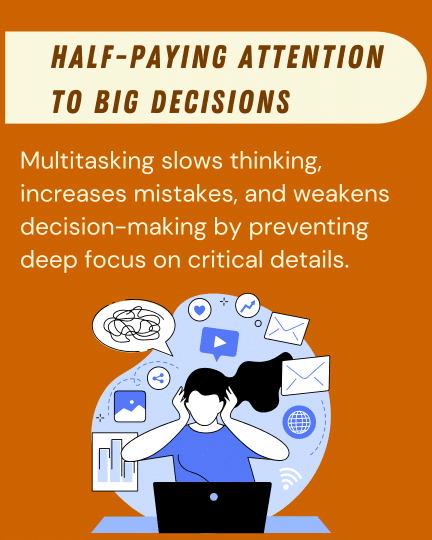
Leaders are expected to make informed, strategic decisions, but multitasking makes it harder to make good decisions, often without your even realizing it.
- Slower Thinking: Studies show that switching between tasks slows down your brain. This means you don’t process information as well, which can delay decisions or make you less confident in them.
- Missing Important Things: Complex decisions require deep thinking and careful analysis. When you multitask, you can miss critical details, which can lead to costly mistakes.
- Problem-Solving Roadblocks: The best solutions often come from focused problem-solving sessions, not from thoughts you squeeze in between meetings.
- The Multitasking Myth: Some leaders think they’re great at multitasking, but research shows that even people who multitask a lot make more mistakes and take longer to do things than those who focus on one thing at a time.
Important decisions need your full attention. Even small distractions can lead to big mistakes.
The “Always Busy, Never Productive” Trap
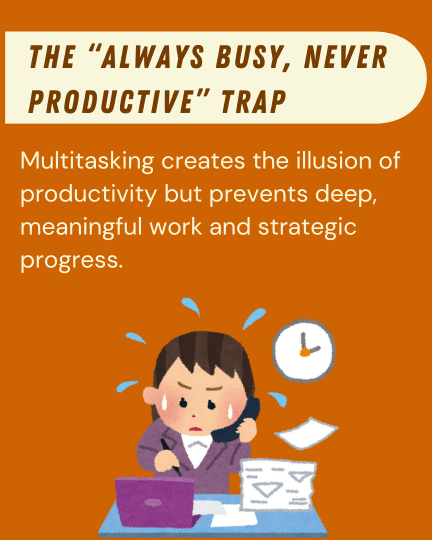
Some leaders think being busy means being productive, but that’s not true. Multitasking makes you feel like you’re getting a lot done, but you’re actually making less meaningful progress.
- Lots of Activity, Little Impact: When you’re constantly switching between tasks, you might check more things off your to-do list, but are they the right things?
- Taking on Too Much: Multitasking often leads to saying “yes” too often because everything seems manageable in small doses. But this quickly becomes too much to handle.
- Shallow Work vs. Deep Work: If you spend all your time answering emails and attending meetings, you lose time for deep, strategic thinking – the kind that really helps companies succeed.
True productivity isn’t about doing more things – it’s about doing the most important things.
Becoming a More Focused Leader
Now that we know how multitasking hurts productivity and leadership, it’s time to fix the problem. As a leader, you don’t need more time – you need to use your time better. The key is to focus sharply on what matters.
Instead of spreading yourself thin across many tasks, try using focused techniques to get more done, make better decisions, and feel less stressed. Let’s explore some practical ways to help you regain control of your attention and work at your best.
The 90-Minute Rule
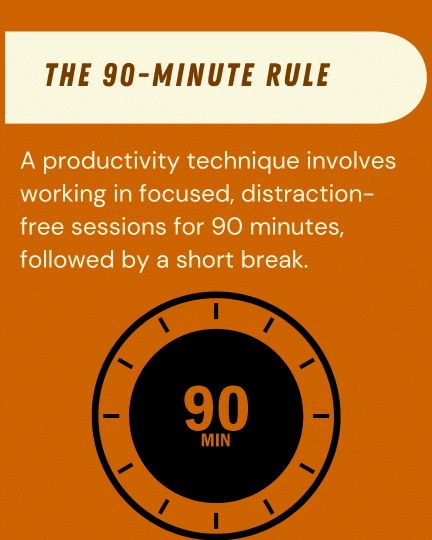
Many leaders are constantly reacting to emails, messages, and meetings. This leads to shallow work and mental fatigue. To regain focus, top performers use the 90-minute Rule. This technique is based on how our brains work best in intense, distraction-free bursts.
- The Science: Our brains can focus deeply for about 90 minutes before needing a break. Studies show that people who work in focused blocks like this do better than those who work without breaks.
- How to Use It:
- Choose your most important task for the day.
- Block out 90 minutes with no distractions – no emails, messages, or calls.
- After 90 minutes, take a 10-15 minute break before moving on to your next big task.
- Why It Works: Instead of constantly switching between tasks, you get more done in less time and produce higher-quality work.
Schedule your deep work sessions for when you’re naturally most productive – mornings for most people, but afternoons if you’re a night owl.
The “CEO Focus Filter”
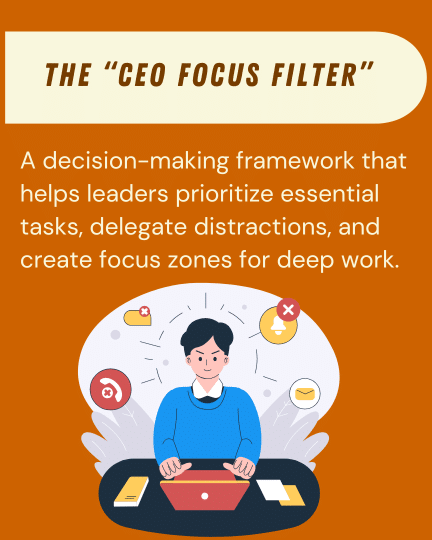
Leaders are constantly bombarded with decisions and distractions. Without a way to filter out less important tasks, you’ll waste time on the wrong things.
- Step 1: Use the Focus Filter
- Before starting a new task, ask yourself:
- Does this need my attention, or can someone else do it?
- Does this help the company move forward? If not, eliminate or postpone it.
- Will this matter in six months? If not, it’s probably not urgent.
- Before starting a new task, ask yourself:
- Step 2: Create “Focus Zones” for Important Work
- No meetings before 11 AM – use mornings for deep work.
- Don’t check email first thing – start with meaningful work, not reactive tasks.
- Group less important tasks (emails, approvals, admin work) into a single time block.
If you’re constantly pulled into small decisions, train your team to bring you solutions, not problems. This will reduce the number of unimportant decisions you have to make.
Digital Fasting
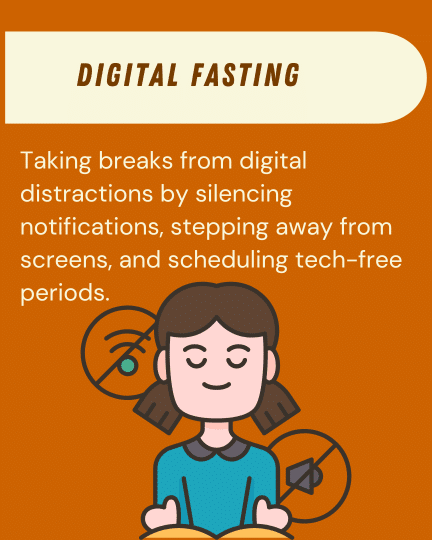
Leaders often feel drained, not from working too much, but from processing too much information.
- What It Is: Taking a break from emails, social media, and notifications to clear your mind.
- How to Use It:
- The 30-Minute Digital Detox – Before important meetings or deep work, step away from all screens for 30 minutes.
- The “Airplane Mode” Trick – Silence notifications and turn on Do Not Disturb when working on important tasks.
- The Sunday Reset – Once a week, take a half-day away from all digital devices to reset your brain.
- Why It Works: Studies show that constant exposure to emails, texts, and notifications increases stress and makes it harder to focus and be creative.
Don’t just reduce digital noise – be selective about it. Unsubscribe from unnecessary emails, mute non-essential channels, and create an information diet that helps you focus, not distract you.
Working Smarter, Not Harder
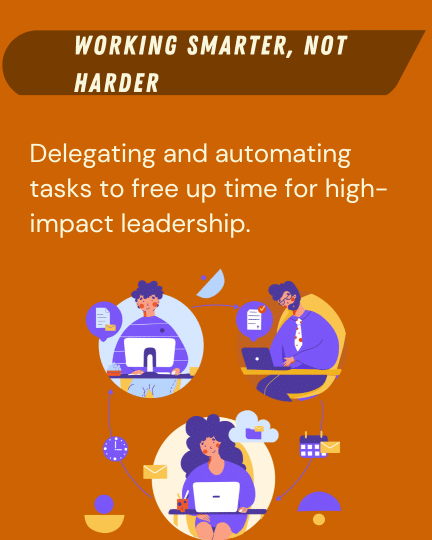
Leaders often feel overwhelmed because they try to do too much themselves. The key to being a high-performing leader isn’t working harder, it’s working smarter. That means learning how to delegate effectively and automate repetitive tasks so you can focus on what truly matters.
Let’s explore how successful leaders free up their time by delegating and automating tasks without losing control over their work. If a task is repetitive, unimportant, or something your team could handle, it’s time to delegate or automate it.
Smart Delegation: A Framework for Every Leader
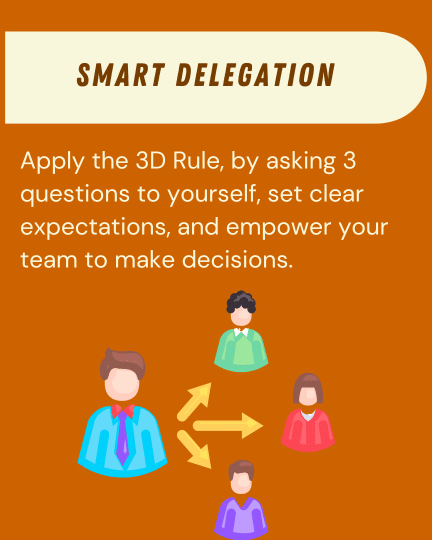
The biggest fear leaders have about delegation is that things won’t be done right. But smart delegation isn’t about dumping work on others, it’s about empowering your team to take ownership.
- Step 1: The “3D Rule” for Delegation
- Before taking on a task, ask:
- Do I need to do this myself? If not, delegate it.
- Does this task contribute to my core leadership role? If not, automate it.
- Does this task require my unique expertise? If not, assign it to someone capable.
- Before taking on a task, ask:
- Step 2: Delegate with Clear Expectations
- Don’t do this: “Hey, can you take care of this?”
- Do this: “I need you to handle X. Here’s the goal, deadline, and key details. Let me know if you have questions.”
- Step 3: Build a Self-Sufficient Team
- Instead of just delegating tasks, delegate decision-making. Encourage your team to bring you solutions, not just problems, so you’re not involved in every small issue.
The best leaders don’t just offload tasks, they develop leaders who can think and act independently.
Automate Repetitive Tasks to Save Hours Every Week
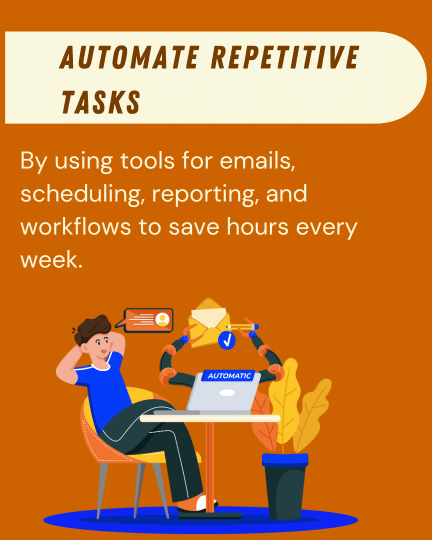
Not everything should be delegated—some tasks should be eliminated through automation.
- What to Automate:
- Email Responses: Use email templates for repetitive replies.
- Meeting Scheduling: Use tools like Calendly to avoid back-and-forth scheduling emails.
- Reporting & Analytics: Automate data tracking instead of manually generating reports.
- Task Follow-Ups: Use workflow automation (Trello, Asana, Slack bots) to track project progress.
- Automation Tools Every Leader Should Use:
- Slack & Microsoft Teams: Automate status updates, reminders, and notifications.
- Zapier & Make.com: Connect apps and automate workflows without coding.
- Notion & Evernote: Automate note-taking and task organization.
- Grammarly & AI Writing Tools: Automate proofreading and content drafting.
If you’re doing the same task repeatedly, there’s probably a tool that can automate it. Invest a little time setting it up, and save hours every week.
Breaking the Multitasking Habit
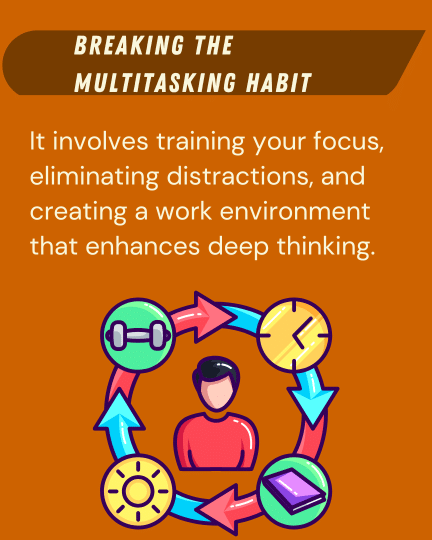
Multitasking is like junk food—it feels good at the time, but over time, it harms your productivity, drains your energy, and weakens your leadership. The good news? Just like with a healthy diet, you can train yourself to ditch distractions and strengthen your focus.
This section will guide you through a step-by-step process to break free from multitasking, rebuild your ability to focus deeply, and create a work environment that supports high-level leadership thinking.
Mindfulness and Productivity
Multitasking isn’t just a habit, it’s a pattern in your brain. If you’ve trained your brain to constantly jump between tasks, it will keep wanting distractions. The solution? Mindfulness training for leaders.
- The “Pause Before Switching” Method
- Before switching to a new task, ask yourself:
- Do I really need to switch right now?
- Is this urgent or just a distraction?
- What will I lose by stopping my current task?
- Before switching to a new task, ask yourself:
- Single-Task Training for Leaders
- Try this simple exercise for 7 days:
- Work in 25-minute focus blocks (use the Pomodoro Technique).
- Put your phone in another room when working on important tasks.
- Turn off all notifications except for critical alerts.
- Try this simple exercise for 7 days:
- The Result:
- Within a week, you’ll feel more in control of your attention.
- Within a month, you’ll start to automatically eliminate unnecessary distractions.
The more you practice focusing intentionally, the easier it becomes. Your brain adapts to a distraction-free workflow just like it adapted to multitasking.
Digital Minimalism for Leaders
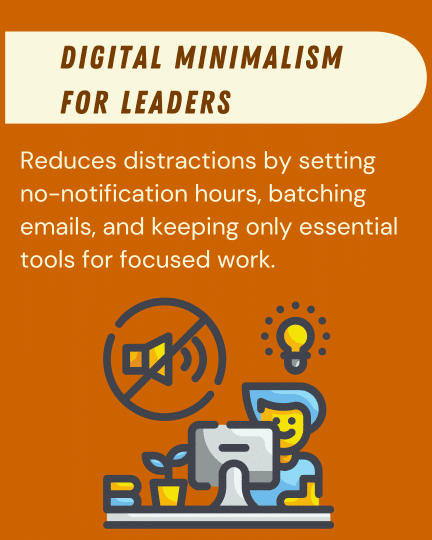
Multitasking isn’t just about what you do, it’s also about the environment you work in. If you’re surrounded by distractions, staying focused will always be a struggle.
- How to Reduce Digital Overload
- Set “No-Notification Hours”—Have at least two hours each day where notifications are turned off.
- Batch Email Time—Check email twice a day at most instead of all day long.
- Unsubscribe and Mute—Reduce unnecessary emails, Slack channels, and group chats that don’t add value.
- The “Essential Tech” Rule
- Keep only essential apps and tools in your workspace. Ask yourself:
- Does this tool help me do focused work?
- Or is it just making me feel busy?
- Keep only essential apps and tools in your workspace. Ask yourself:
Try a one-week experiment—delete social media apps from your phone and limit emails to scheduled times. See how much your mental clarity improves.
The 30-Day No-Multitasking Challenge
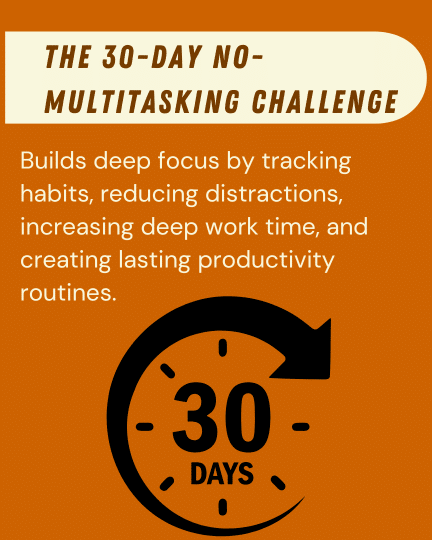
One of the best ways to reprogram your brain is through a structured challenge. Here’s a simple 30-day plan to build deep focus and eliminate multitasking.
- Week 1: Awareness & Small Adjustments
- Keep a multitasking log—track when and why you switch tasks.
- Set a Deep Work Block—1 hour per day with no distractions.
- Disable notifications on non-essential apps.
- Week 2: Eliminating Distractions
- Batch-check email and messages instead of reacting in real time.
- Introduce “Do Not Disturb” hours—a time block for intense work.
- Delegate or eliminate unimportant tasks to free up mental space.
- Week 3: Strengthening Deep Focus
- Increase deep work time from 1 to 2 hours per day.
- Use physical boundaries (closed door, noise-canceling headphones) to prevent interruptions.
- Start meetings with a “no-laptops” rule for better engagement.
- Week 4: Full Implementation & Habit Building
- Aim for 4+ hours of distraction-free work daily.
- Reduce overall screen time and spend more time on strategic thinking.
- Reflect on productivity improvements and adjust where needed.
If you complete this challenge, multitasking will no longer feel natural, and you’ll be far more productive without even trying.
Final Thoughts
In today’s fast-paced business world, multitasking might seem like a good thing, but it’s actually a hidden problem that hurts productivity. Instead of making you more efficient, constantly switching between tasks drains your energy, increases mistakes, and weakens your ability to lead effectively.
The most successful leaders don’t try to juggle multiple tasks at once. They master the ability to focus deeply on what’s truly important. By replacing multitasking with focused work sessions, delegating less important tasks, and reducing digital distractions, you can regain control over your time, energy, and decision-making power.
Productivity isn’t about doing more things, it’s about making smart choices with your time. Start small by eliminating one distraction, setting aside focused work blocks, or delegating a task today. Over time, these simple changes will transform how you work, helping you lead with clarity, confidence, and impact.
Ready for a knowledge showdown? Answer these questions and see how you rank.


 FREE EBOOK