
Last modified: October 1st, 2025
Unlock Hidden Potential in Competitive Analysis with ChatGPT

Table of contents
- Step 1: Figure Out What You Really Want to Know
- Step 2: Get to Know Your Competitors and Where They Stand
- Step 3: Uncover Your Competitors' Strengths and Weaknesses
- Step 4: Compare Products and Pricing
- Step 5: Listen to What Customers Are Saying
- Step 6: Stay Ahead of the Curve – Monitor Market Trends and Spot New Opportunities
- Final Verdict
Competitive analysis isn’t just about collecting data; it’s about asking the right questions to uncover those golden insights. Whether you want to understand your competitors’ pricing, their place in the market, or what their customers really think, the key is knowing how to approach your analysis. That’s where ChatGPT comes in. By asking effective questions, you can unlock hidden potential in competitive analysis with ChatGPT to quickly gather and analyze competitive intel, saving you time and revealing hidden opportunities. Instead of drowning in data, you can ask targeted questions that expose competitor weaknesses, market gaps, and emerging trends, giving your business a real edge. This article will show you how to ask the right questions to unlock ChatGPT’s full potential for competitive analysis. You’ll learn how to dive deeper, find actionable insights, and effortlessly stay ahead of the competition.
Step 1: Figure Out What You Really Want to Know
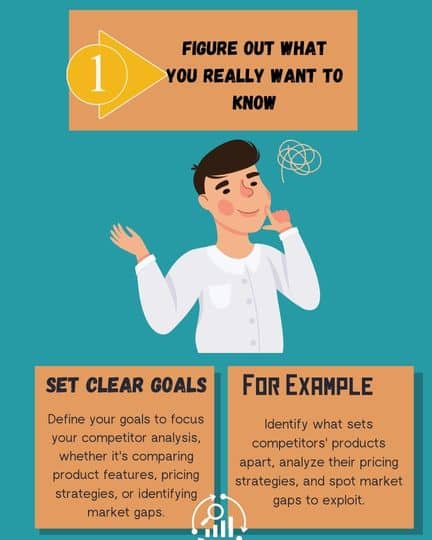
Before you dive into analyzing your competition, it’s super important to know what you’re looking for. If you don’t have a clear focus, you’ll end up with a ton of information that’s not very helpful. To make the most of your time and effort, you need to set some goals before you start.
Set Clear Goals
Start by pinpointing what you want to learn about your competitors. Do you want to understand what makes their products tick? Are you curious about how they price things? Or maybe you’re trying to find gaps in the market where your own product or service can shine. Knowing your goals ahead of time will help you get the right information.
For example, if you want to compare product features, you’ll need to ask detailed questions about what makes your competitor’s product special. If you’re interested in pricing strategies, you’ll need to focus on how your competitors price their products and if those prices make sense in the current market.
Example Goals
- Understanding what makes your competitors’ products stand out.
- Analyzing how competitors price their products.
- Finding gaps in the market that you can fill.
Example Questions to Ask
- “What are the best features of [Competitor A]’s product in the software industry?”
- “What are the main differences between [Competitor B] and [Competitor C]’s latest products?”
By setting clear goals, you can ask ChatGPT the right questions and get specific, useful insights. This will help you come up with winning strategies for your own business.

Step 2: Get to Know Your Competitors and Where They Stand
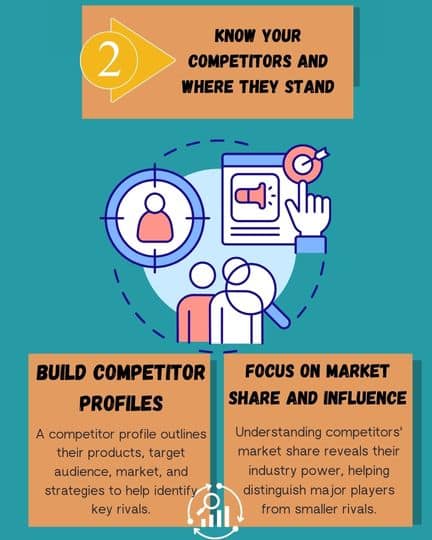
Once you know what you want to find out, it’s time to take a closer look at your competitors. This means not just knowing their names, but really understanding their place in the market, the products they offer, and what they’re focusing on strategically. ChatGPT can help you create a detailed profile for each competitor, highlighting their strengths, weaknesses, and how much they influence the market.
Build Competitor Profiles
Think of a competitor profile as a report card for each rival. It should include important information like the products they sell, who they’re trying to sell to, the main markets they operate in, and how much of the market they control. This information helps you figure out which companies are your biggest rivals and how they’re trying to attract customers. For example, some companies might focus on high prices and fancy features, while others might offer simpler products at lower prices. Understanding these differences is key to positioning your own business effectively.
Focus on Market Share and Influence
Knowing how much of the market each competitor controls is important for understanding how much power they have in your industry. This helps you tell the difference between the major players, the up-and-comers, and the smaller competitors. With the right data, you can track which companies are growing and which ones are struggling.
Example Questions to Ask
- “Give me an overview of [Competitor A]’s position in the US skincare market.”
- “Who are the top three competitors in the online dermatology field, and what makes them different?”
By using ChatGPT to create these detailed competitor profiles, you’ll get a clearer picture of the competitive landscape. This will help you make smarter decisions about where your business fits in and how to make it stand out.
Step 3: Uncover Your Competitors’ Strengths and Weaknesses
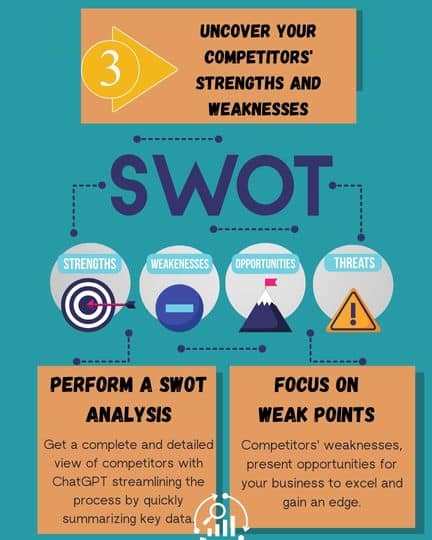
One of the best ways to size up your competition is to do a SWOT analysis. SWOT stands for Strengths, Weaknesses, Opportunities, and Threats. This analysis helps you see where your competitors are doing well and where they’re falling short. By identifying both their strengths and weaknesses, you can take advantage of opportunities they might be missing and avoid threats they might not be handling well.
Perform a SWOT Analysis
You can use a SWOT analysis to get a complete picture of each of your main competitors. Understanding their strengths helps you figure out what makes them successful, and knowing their weaknesses shows you where you might have an edge. Opportunities and threats usually depend on what’s happening in the industry and can come from things like new regulations or technology. ChatGPT can help you create a structured SWOT analysis by summarizing a lot of information quickly.
Focus on Weak Points
Your competitors’ weaknesses are where you can find the best chances to make your business stand out. Whether it’s problems with customer service, outdated technology, or not reaching enough customers, these are areas where you can step in and gain an advantage. For example, if a competitor has bad customer service, you can make yours amazing and attract more customers.
Example Questions to Ask
- “What are [Competitor B]’s biggest weaknesses when it comes to customer service?”
- “Do a SWOT analysis for [Competitor C] in the AI healthcare market.”
A good SWOT analysis not only gives you a snapshot of your competitors but also gives you practical insights that can help you plan your business strategy.
Step 4: Compare Products and Pricing
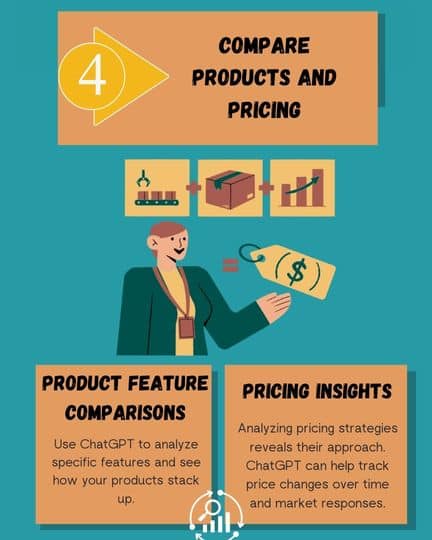
One of the most useful things you can learn from analyzing your competition is how their products and prices stack up against yours. This step is really important for making smart decisions about your own products and pricing.
Product Feature Comparisons
Knowing how your competitors’ products compare to yours in terms of features, what they do, and the benefits they offer can help you see where your product might need improvement or where it’s already better. Are they offering more features for a similar price? Are their products easier to use or more flexible? Asking ChatGPT to compare specific product features can help you get a clear picture of how your products measure up.
Pricing Insights
Pricing is one of the most obvious parts of your competitors’ strategies. By looking at how they price their products, you can see if they’re going for high prices, offering discounts, or using different price levels. ChatGPT can also help you track how prices change over time, showing you how competitors react to market trends or what customers are doing.
Example Questions to Ask
- “How does [Competitor A]’s latest product compare to [Competitor B]’s in terms of features?”
- “What pricing strategies are the top competitors in the US dermatology market using?”
By understanding both product features and pricing strategies, you can make changes to your own products to make sure they’re competitive and find opportunities to be innovative.
Step 5: Listen to What Customers Are Saying
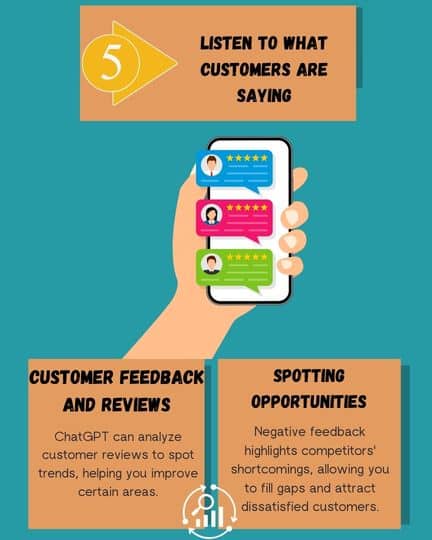
What customers think about your competitors can really affect how those competitors are seen in the market. By looking at reviews, feedback, and complaints, you can get a better idea of what customers love (and hate) about your competitors’ products. This gives you a chance to learn from their mistakes and copy their successes.
Customer Feedback and Reviews
ChatGPT can help you sift through customer reviews and feedback to find common themes. For example, if customers keep complaining about a competitor’s bad customer support, you can focus on making your own customer support amazing. On the other hand, if customers are praising certain features, you might want to add similar features to your own products.
Spotting Opportunities
Negative feedback often shows you where competitors are falling short with their products or services. This gives you a chance to fill those gaps. For example, if people often complain that a competitor’s product is hard to use, you could create a product that’s much easier to use and attract those frustrated customers.
Example Questions to Ask
- “Summarize the main complaints from customer reviews of [Competitor A]’s latest product.”
- “What are customers praising about [Competitor B] that we could learn from?”
By regularly checking on customer sentiment, you can make smart decisions that meet the needs and address the concerns of your target audience better than your competitors.
Step 6: Stay Ahead of the Curve – Monitor Market Trends and Spot New Opportunities
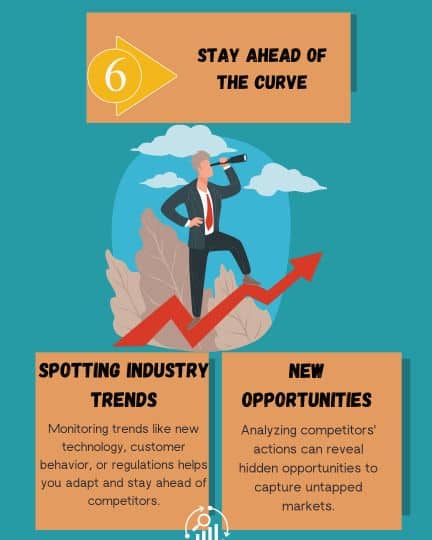
The last step in analyzing your competition is to stay on top of the latest trends in the market and find new opportunities before your competitors do. ChatGPT can help you spot these emerging trends and figure out how they might affect your industry.
Spotting Industry Trends
Trends can shape the future of your industry, so keeping an eye on them can help you adapt and come up with new ideas. Whether it’s a new technology, a change in how customers behave, or new regulations, being aware of trends will give you an advantage over your competitors.
New Opportunities
By analyzing what your competitors are doing – or not doing – you can find opportunities that might not be obvious at first. For example, if your competitors are ignoring a certain group of customers, you can focus your efforts there and win over that untapped market.
Example Questions to Ask
- “What are the biggest trends emerging in the US dermatology market?”
- “What opportunities are competitors in the online dermatology field missing?”
By constantly monitoring trends and looking for new opportunities, you can stay ahead of the game and take advantage of changes in the market before your competitors do.

Final Verdict
Think of competitive analysis as a puzzle. Each piece – your competitors’ strengths and weaknesses, their products, their prices, what customers are saying, their online strategies, and the latest market trends – contributes to the bigger picture. ChatGPT acts like your puzzle-solving partner, helping you gather and understand these pieces more efficiently.
By asking the right questions and following the steps we’ve outlined, you can use ChatGPT to uncover hidden opportunities, like gaps in the market or unmet customer needs, and discover areas where you can outshine your rivals.
You can also use it to make data-driven decisions, basing your strategies on solid information instead of guesswork. ChatGPT helps you understand what works for your competitors and what doesn’t. Finally, it allows you to stay ahead of the curve by keeping your finger on the pulse of the market. Anticipate changes, adapt quickly, and seize new opportunities before your competitors even notice them.
But competitive analysis isn’t a “set it and forget it” task. The business world is dynamic, with trends and competitors constantly evolving. Make it a habit to regularly check in with ChatGPT, analyze your competitive landscape, and refine your strategies. This way, you can ensure you’re always one step ahead, making informed decisions that lead to lasting success.
Test your wits! See how well you score on this quiz.
Stay Ahead with ManagerUp
Subscribe to our newsletter for practical tips on mastering Al, building emotional resilience, and advancing your career each week.
Subscribe Now!We respect your privacy. Unsubscribe at any time.